The Complete Guide to Indian Pulses: Varieties, Quality Parameters and HS Codes
India is the world\'s largest producer of pulses — and its largest consumer, which is precisely why export availability requires planning. For importers, pulses are a staple-volume business: thin margins, big volumes, and quality disputes that hurt. Here is the working knowledge you need.
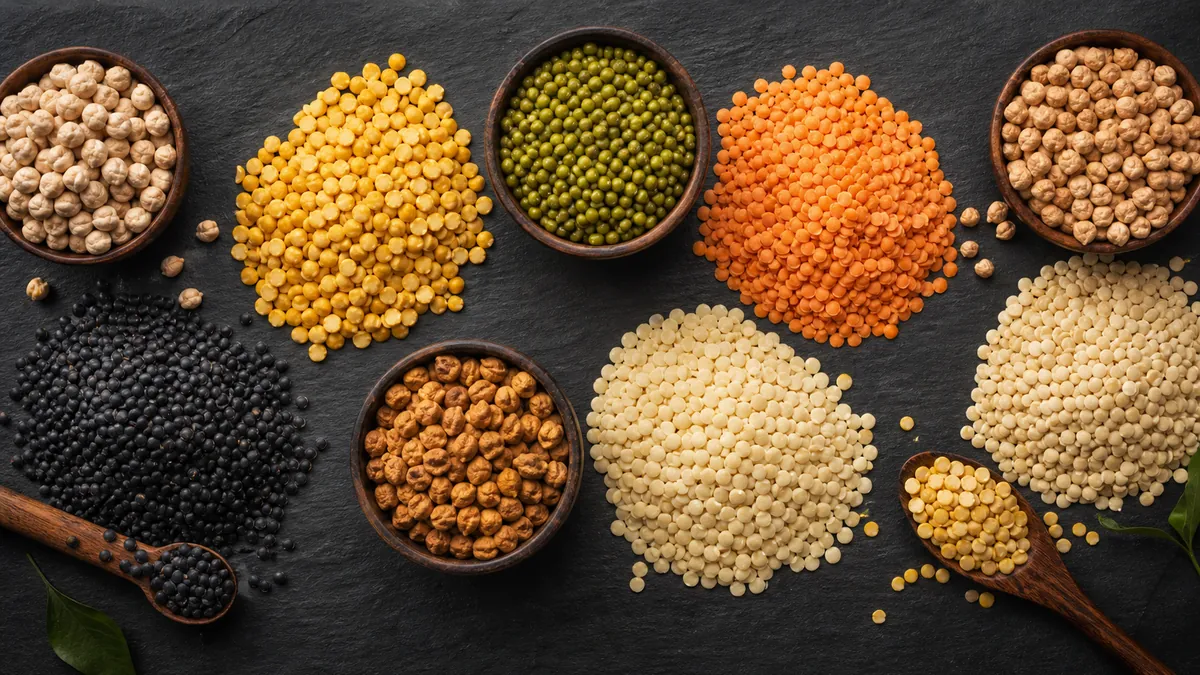
The five export workhorses
- Chickpeas (chana): Desi (brown, small, 40–44 count/oz) and Kabuli (cream, bold, 40/42 to 58/60 count). HS 07132010. Desi is the volume leader; Kabuli commands premium.
- Pigeon peas (toor/tur): whole and dal (split). HS 07136000. Key for Middle East, Africa and Asia markets.
- Green mung (moong): whole, split and polished. HS 07133100. Strong demand in East Asia — Japan and Korea buy high-grade polished splits.
- Red lentils (masoor): whole and split. HS 07134000. Canada and Turkey compete with India here; specification discipline wins.
- Black gram (urad): whole and split. HS 07133200. South Asian diaspora markets and papad manufacturers.
Quality parameters that decide price
- Moisture: max 10–12% depending on market — the single biggest weight risk.
- Purity: 99% / 99.5% are the standard contract grades.
- Damaged & discoloured kernels: typically max 2%.
- Foreign matter: max 0.5–1% (stones, weed seeds, other grains).
- Count/size: chickpeas and Kabuli are traded on kernel count per ounce — a 40/42 count Kabuli prices well above 58/60.
- Weevil/live infestation: zero tolerance at discharge for most markets; fumigation certificates required.
HS codes quick reference
- Chickpeas (garbanzos) — 07132010 / 07132090
- Pigeon peas (toor) — 07136000
- Green mung beans — 07133100
- Red lentils (masoor) — 07134000
- Black gram (urad) — 07133200
- Kidney beans (rajma) — 07133300
Buying pulses without drama
Three rules. First, contract on "as per inspection" with a named agency — pulses are the most disputed commodity category at destination. Second, verify fumigation: many rejections are live-weevil claims. Third, watch the Indian domestic season: kharif arrivals (October–November) and rabi arrivals (March–April) drive export availability and price.
JQ EXPORTS supplies chana (desi & kabuli), toor, moong, masoor and urad in 25/50 kg bags and big bags, with pre-shipment inspection by SGS/BV on request. Explore pulse products.
Ready to discuss a shipment?
Our export desk responds within 24 business hours.
Request a Quote WhatsApp